
In this article
Spices from Malnad, coffee from Chikkamagaluru estates, cold-pressed oils, jaggery, millets, dry fruits, honey, pickles — Indian natural food products have loyal buyers across the country. Many producers already sell through local shops, exhibitions and WhatsApp groups. An online store for natural food products lets you reach buyers in other cities, build your own brand and keep a direct relationship with repeat customers.
This guide explains what a food products store needs, how to choose a platform, the labelling and FSSAI basics, and how to handle payments and shipping in India.
Who this guide is for
- Farmers and farmer groups selling produce, plants and seeds directly
- Small food brands selling spices, masalas, flours and snacks
- Dry fruit and nut sellers moving from wholesale to retail
- Malnad and coastal producers selling coffee, pepper, cardamom, areca-based items and local specialities
- Existing shops that want online orders alongside walk-in sales
Examples from our work
JST Click has built several stores in this space. Here is how each describes itself:
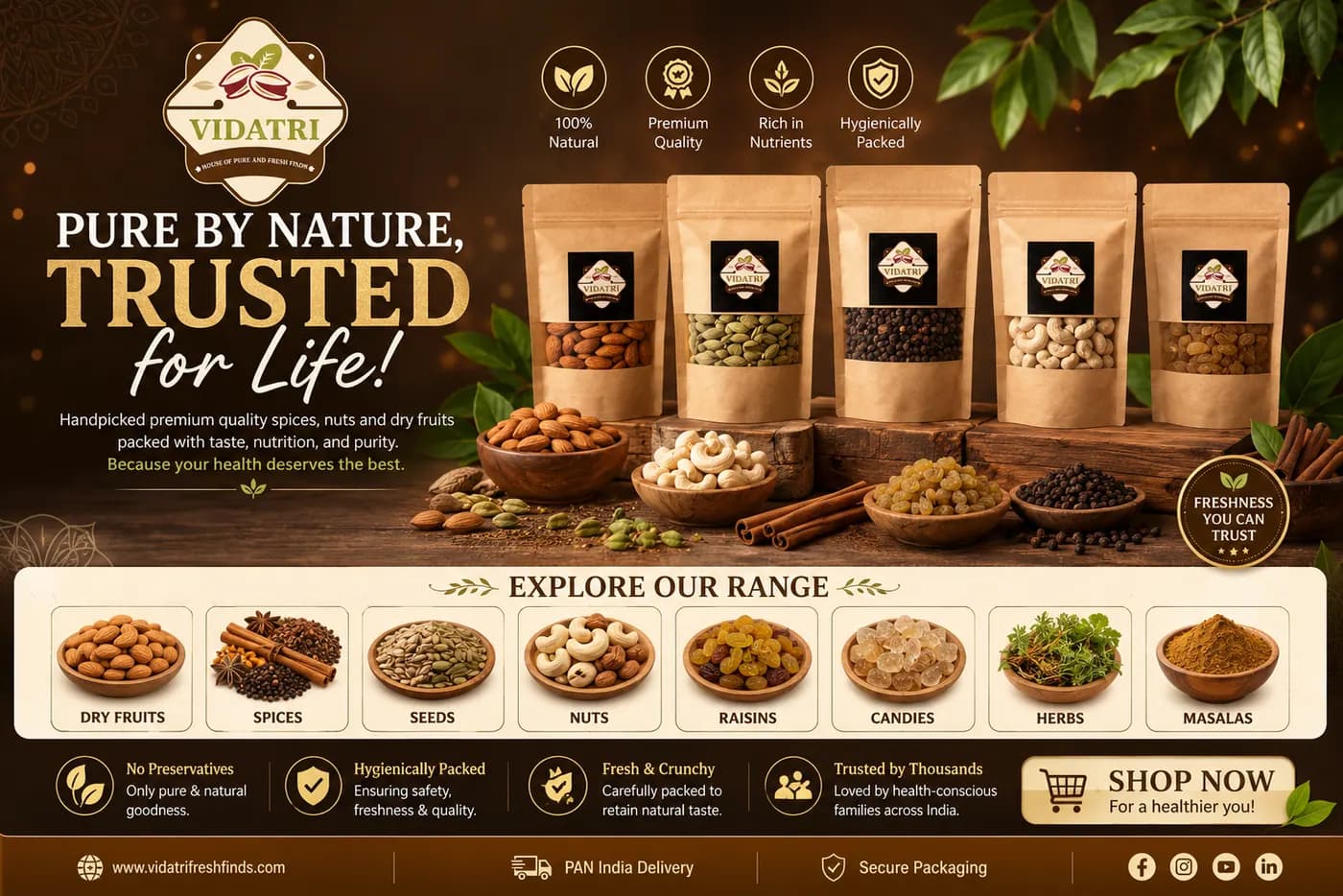
- Vidatri — Natural foods and spices online store
- Bandhavya Products — Dry fruits and natural products store
- Hombale Farms — Farm-fresh produce, plants and seeds
- Horanadu Products — Coffee, spices and Malnad products
You can see them in our work. Each business is different, which is why the plan for your store should start with what you sell and to whom.
Features a food products store usually needs
For shoppers
- Clear product photos — the actual product, the pack and the texture
- Weight variants — 100 g, 250 g, 500 g, 1 kg — each with its own price and stock
- Honest product descriptions — origin, how it is processed, how to store it, shelf life
- Ingredients and label details shown on the product page
- Combos and gift boxes for festivals and corporate gifting
- Reviews from real buyers
- Fast mobile checkout with UPI, cards and COD
- Order tracking by SMS, email or WhatsApp
For you, the seller
- Easy product and stock updates, including batch-wise stock if you need it
- Pin code serviceability — where you deliver and how fast
- Weight-based shipping rules
- Discount codes and festival offers
- GST invoices generated automatically
- Order export for your accountant
- Abandoned cart reminders
Specific to farm produce, plants and seeds
- Seasonal availability — mark items as "in season" or "coming soon"
- Pre-orders for harvest batches
- Local delivery slots for fresh produce, with wider shipping for dry goods only
- Care instructions for plants and sowing information for seeds
Choosing a platform
| Option | Best for | Things to know |
|---|---|---|
| Shopify | Quick launch, standard catalogue, small team | Monthly fee and app costs; less control over custom flows |
| WooCommerce | Content-rich stores with recipes and blogs | Needs reliable hosting and regular updates |
| Custom build | Subscriptions, B2B + retail on one site, special pricing | Higher initial effort, full control |
Our Shopify vs WooCommerce comparison goes deeper on the two most common choices.
FSSAI, labelling and honest claims
Food is a regulated category, and your website is part of how you present your product. Keep these points in mind:
- FSSAI registration or licence — most food businesses need one, depending on size and activity. Show your FSSAI number on the site and on packaging as the rules require.
- Label information — product name, ingredients, net quantity, best before or use by date, batch details, manufacturer or packer address and other mandatory details. Online product pages are expected to show key label information too.
- "Organic" claims — in India, calling a product organic generally requires certification under the recognised systems. If your products are natural or traditionally grown but not certified, describe them accurately without using "organic" loosely.
- No health claims you cannot support — avoid saying a product cures, prevents or treats anything. Describe taste, origin, process and use instead.
Rules change, so confirm current requirements with FSSAI resources or a food regulatory consultant. A good developer will make sure your product page template has space for every detail you need to show.
Payments, COD and GST
- UPI, cards, net banking and wallets through a gateway such as Razorpay
- COD, with limits or confirmation to control returns
- GST invoices with correct HSN codes and tax rates for each product — food items can fall under different GST rates, so check with your accountant
- Clear refund and return policy — perishable and opened items usually have different rules
Packaging and shipping
Spices, coffee and dry fruits travel well if packed properly. Fresh produce usually does not travel far.
- Use a courier aggregator like Shiprocket for labels, courier choice and tracking
- Pack against moisture, heat and crushing
- Set weight slabs so shipping is priced correctly
- Offer local delivery in Bengaluru or your town for fresh items
- Show realistic delivery times per region
Trust, content and SEO
Buyers cannot smell your cardamom or taste your coffee online, so content does the work.
- An About page with your farm, region and process
- Photos of the farm, harvest and packing
- Recipes and usage ideas
- Category pages that match searches like "buy Malnad pepper online" or "Coorg coffee powder"
- Kannada pages if a large share of your buyers are local
- WhatsApp chat for questions and bulk orders
Search visibility takes time to build. Our SEO services can help once the store is live.
Common mistakes to avoid
- Using stock photos instead of your real products — buyers notice, and it hurts trust.
- Vague weights and prices — always show net quantity and price per pack clearly.
- Free shipping on heavy items without doing the maths — dry fruits and jaggery in bulk can cost more to ship than you expect.
- Running out of stock silently — mark items out of stock or offer a "notify me" option.
- Using the word "organic" without certification.
A simple launch plan
- List your products, variants, prices and weights.
- Collect label details and FSSAI information for every product.
- Shoot good photos of each product and pack.
- Pick a platform based on your catalogue and plans.
- Set up payments, GST and shipping rules.
- Test orders end to end, including COD and returns.
- Launch to existing customers on WhatsApp first, then market more widely.
How JST Click can help
JST Click is a website, app and software development company in J. P. Nagar, Bengaluru. We have built online stores for natural foods, dry fruits, farm produce and Malnad products, including Vidatri, Bandhavya Products, Hombale Farms and Horanadu Products.
We help you choose the right platform, set up product pages with the details food buyers and regulations expect, and connect payments, GST invoices and shipping. Explore our e-commerce website development services, see our work, or talk to us about your store.
Frequently asked questions
Do I need an FSSAI licence to sell food products online?
Food businesses in India generally need FSSAI registration or a licence depending on their size and activity, and online sellers are expected to show it. Check the current FSSAI rules for your category and turnover, or ask a consultant, before you launch.
Should I use Shopify, WooCommerce or a custom store for food products?
A hosted platform or WooCommerce suits most small and mid-sized food brands with standard products. A custom build makes sense for subscriptions, complex weight-based pricing, B2B and retail on one site, or deep integration with your own stock system.
How do I ship spices and dry fruits across India?
Most stores use a courier aggregator such as Shiprocket to compare couriers, print labels and track parcels. Pack for moisture and heat, and set weight slabs carefully so shipping charges cover your cost.
Can I offer cash on delivery?
Yes, and many Indian shoppers still prefer it. To reduce returns, you can set a COD limit, add a small COD fee, or confirm COD orders by WhatsApp before dispatch.
Can my store be in Kannada as well as English?
Yes. A bilingual store can help if you sell to local customers in Karnataka, while English pages help you reach buyers across India. Plan which pages need translation and who will maintain them.
- E-Commerce
- Food Products
- Spices
- Farm Produce
- Online Store
- Our Projects

Written by
JST Click Team
We design and build websites, mobile apps and software for businesses from our office in J. P. Nagar, Bengaluru, and write these guides from what we see on real projects.